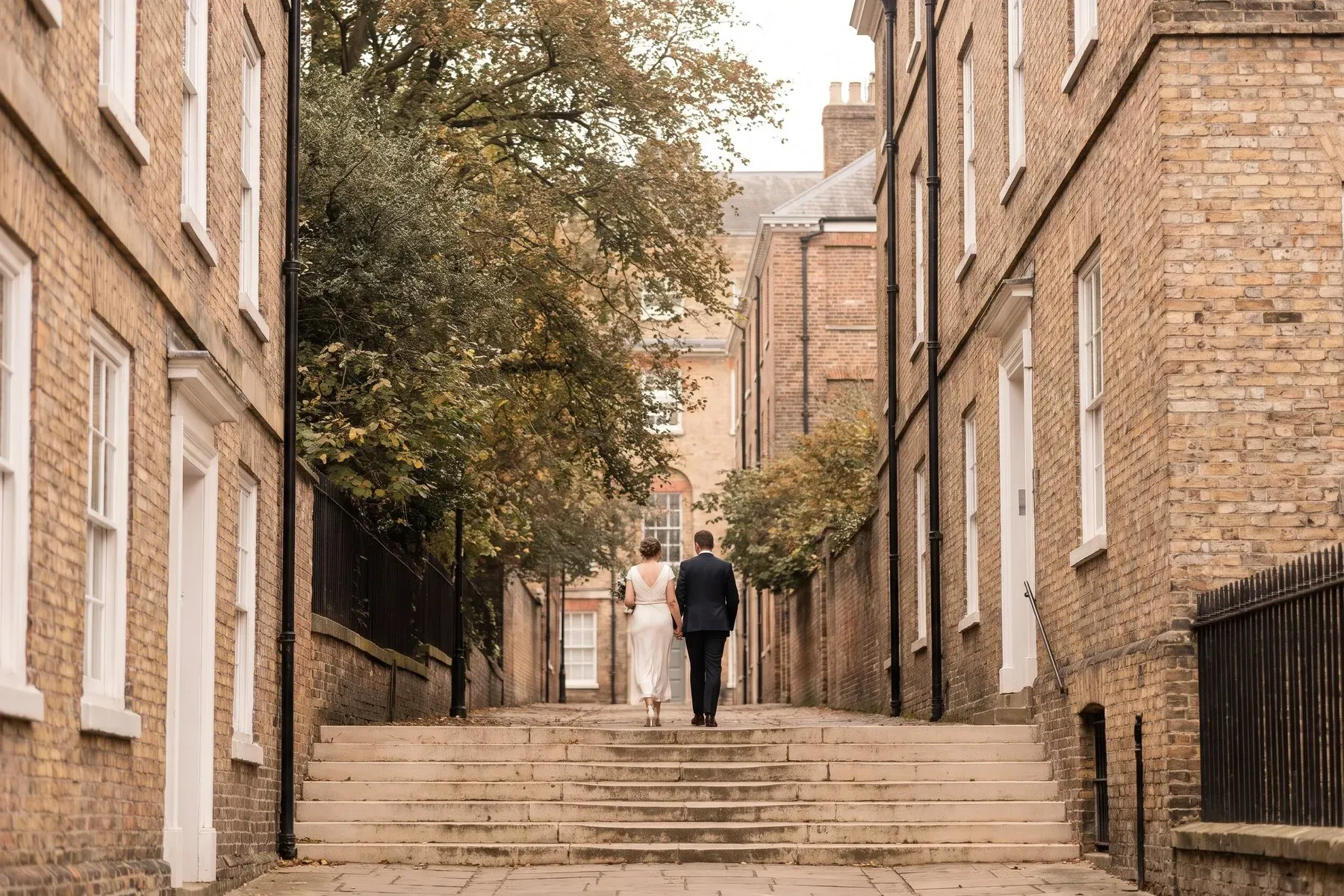

Civil ceremonies, blessings and celebrant-led ceremonies are three different things, and the difference matters before you book anything. This is a plain guide to how they fit together in England. It is not legal advice, and the rules can change.
The legal ceremony
To marry legally in England, you give notice at your local register office. You need to have lived in the area for at least seven days before you give notice, and you each give notice in the district where you live. Then you book the registrars for your date and venue. The register office will tell you what to bring and how far ahead to do it.
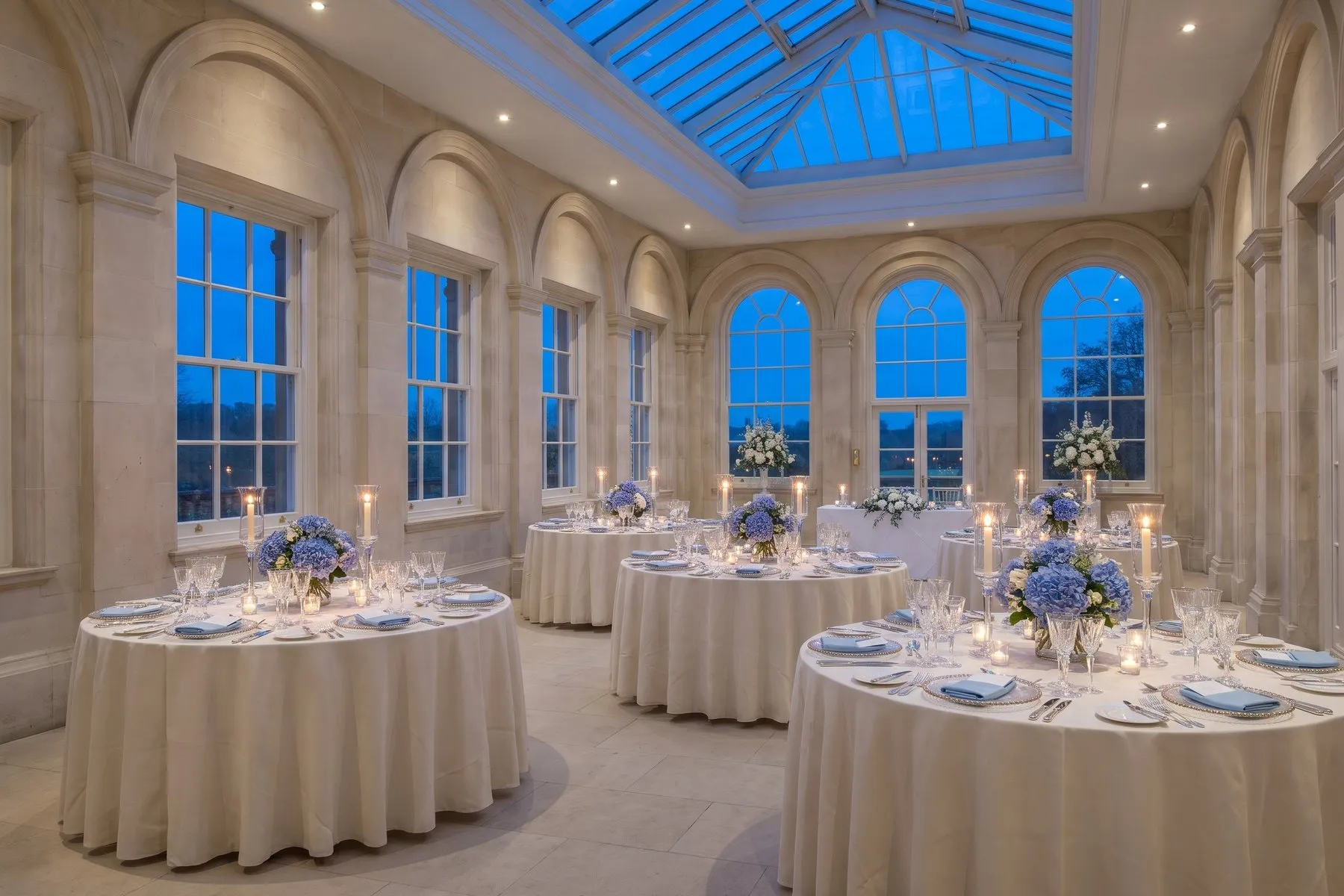
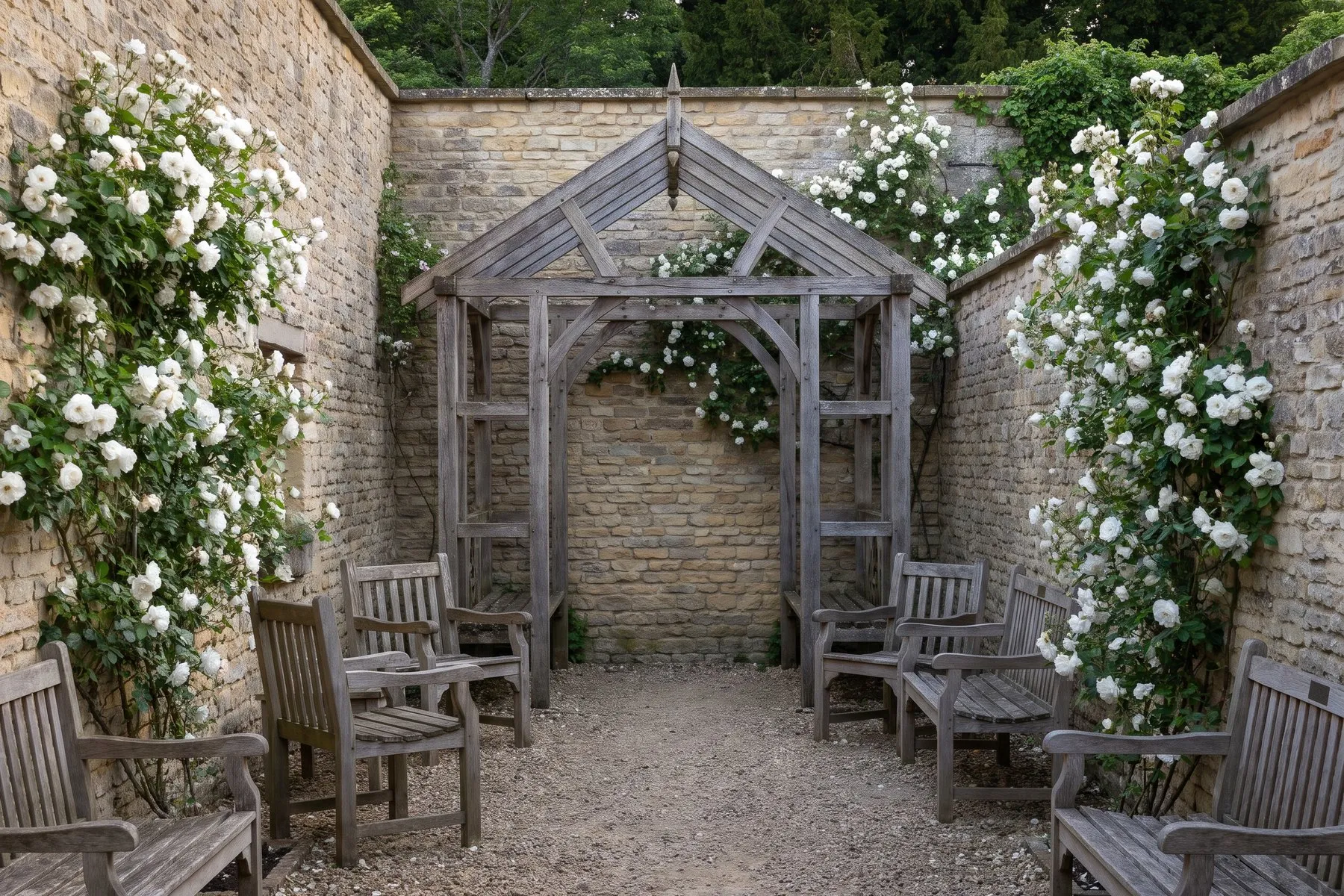
A civil ceremony can take place in an approved room or an approved outdoor space. The venue has to be approved for ceremonies, and the registrars have to be available on your date. At Wrenhurst, the approved spaces include the Drawing Room, the Orangery, the Great Hall and the Walled Garden. The ceremony is led by the registrars, and the legal words are set by law.
Approved rooms and outdoor spaces
Not every room is approved, and the approval can change. A space that holds a ceremony this year may not be approved next year, so check with your register office before you rely on it. Outdoor ceremonies are possible in an approved outdoor space, but the weather plan still matters. If the ceremony has to move inside, the indoor room must also be approved.
We do not give legal advice and we do not promise that a date or a room will be approved for your ceremony. Your register office has the final word, and we ask you to check with them before you book the registrars.
Blessings and celebrant-led ceremonies
A blessing or a celebrant-led ceremony is not a legal marriage on its own. Many couples marry legally first, at a register office or in an approved room, and then hold a blessing or a celebrant-led ceremony with friends and family. The second ceremony can be personal, with readings, music and promises of your own. It just does not make the marriage legal.
St Anne's Chapel at Wrenhurst is used for blessings and celebrant-led ceremonies. A legal ceremony takes place first in the Drawing Room or at a register office. That order is not a formality; it is the legal position.
A practical checklist
Work backwards from your date. Give notice in good time, book the registrars, confirm the room is approved, and tell your guests what to expect. If you are having a blessing or a celebrant-led ceremony, decide where the legal ceremony happens and who needs to be there.
- Give notice at your local register office
- Book the registrars for your date and venue
- Check that the room or outdoor space is approved
- Confirm the indoor plan if the weather turns
- Decide whether the legal ceremony comes first
- Ask what the register office needs and when
What we ask
We ask every couple to check the legal position with their register office before they sign a hire agreement. We can tell you which of our spaces are approved today, and we can put you in touch with the right office. We cannot give legal advice, and we do not make promises about approval. That is the honest position, and it is the one that keeps your date on solid ground.
If something is unclear, ask. A short call to your register office is better than an assumption that turns into a problem six months later. Check with your register office.